 Paul Rosser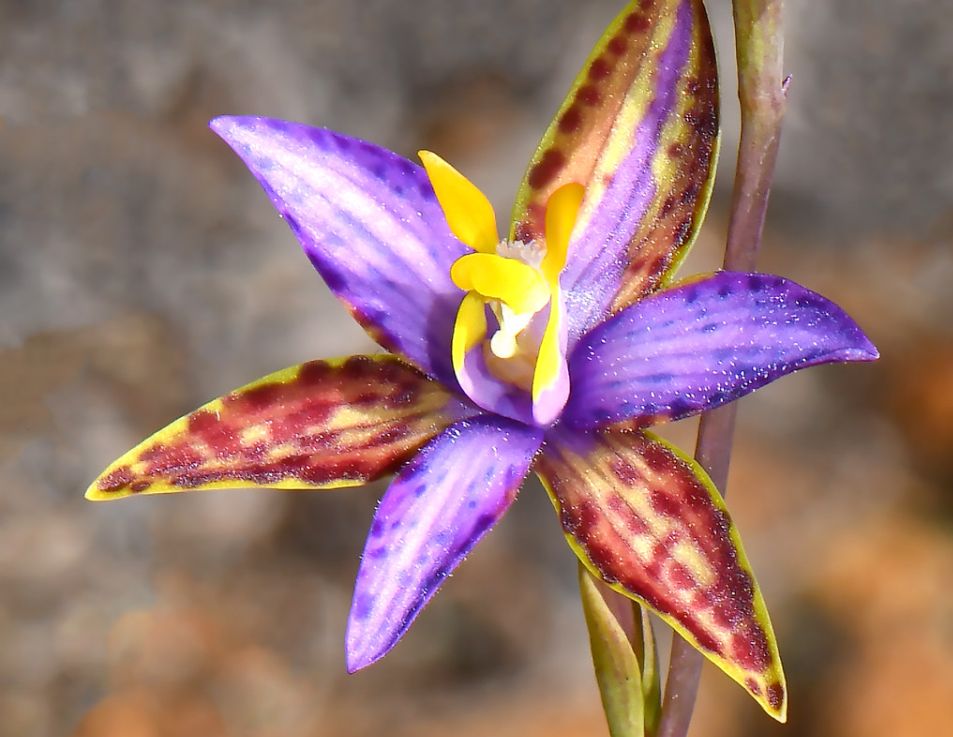
There has been good follow up rain in July with 83.5mm. The average for July over the last 100 years is 71.8mm. The Year to Date (YTD) rainfall rose to 374.5mm. It was lovely to see all of our ponds overflowing down to the Willunga Creek this month. Our stream flow was strong for July over many days, as we benefitted from the re-surfacing of Old Coach Road, some time ago. On the second of the month we had two fronts joining, one from Port Headland and another from Albany, resulting in 35.0mm in one day. For us, the joy of seeing our 50,000litre tank overflow was fantastic.
How did we compare with the last fifteen years?
2026 83.5mm 374.5mm
2025 102.5mm 258.0mm
2024 57.5mm 217.0mm
2023 41.0mm 368.5mm
2022 31.5mm 251.5mm
2021 102.0mm 302.5mm
2020 26.5mm 293.0mm
2019 32.0mm 224.5mm
2018 42.5mm 166.5mm
2017 103.5mm 299.5mm
2016 131.0mm 366.5mm
2015 89.5mm 325.0mm
2014 66.0mm 295.0mm
2013 99.0mm 326.0mm
2012 62.0mm 380.0mm
Looking forward to the next quarter. The first factor to be aware of is El Nino has strengthened to the point that forecasters are telling us that it will most likely be the strongest yet, ‘tracking into uncharted territory.’ A typical El Nino does not usually peak until November/December, so we are unsure what will happen over the next few weeks. Past events of a similar magnitude have contributed to our hottest and driest years on record. Also coming in to play is the Southern Oscillation Index, which measures the pressure difference between Darwin and Tahiti. Currently this index is in free fall. This has caused the easterly trade winds, which bring tropical moisture to eastern states, to reverse. This will reduce rainfall in the east dramatically over the next few months. The other driver of our weather is the Indian Ocean Dipole. This also is showing signs of emerging. This may well have a two-fold effect on our state. We will have a double whammy of having less rain from the west and the east. Temperatures into summer will possibly be up by around 2 degrees, both by day and night. While rainfall in a typical El Nino year returns to normal by the end of January, the temperature does not. A hot summer is likely for 2026/7. The good news is that we are not exiting a severe drought this season, so bushfire severity should hover around average over summer. Here’s hoping forecasters are right on that count.
Some good news!! About a third of the world’s Helium comes out of the Middle East (Qatar in fact). This has been affected by the US/Iran war. Helium is used in MRI’s, mobile phones, computers, submarines and other electronic manufacture. Learn something new every day, don’t we!! In South Australia’s Yorke Peninsula, we have found Helium to depths of 900metres by a Company called Gold Hydrogen. Gold Hydrogen have hopes of having commercially acceptable operations within 18 months. This operation is based just outside Port Vincent. The Iranian missile strikes on Qatar’s Ras Laffan Gas Plant have made this discovery very lucrative in this period of world shortage. It is also good to hear that no fracking is involved and the mine site is no bigger than a soccer field. The Farmer is elated with the royalties he is beginning to get, now production is commencing.
To finish off, Western Australian scientists have cloned the Queen of Sheba orchid. Only 30 known plants are in the world today and extinction was feared. It is one of the world’s rarest plants. The cloning technique known as Embryogenesis is being done in the laboratory and one seed can be cloned into many plants. Currently. they have got over 1,000 plants produced. They are now flowering in year three. This usually starts in year five in the wild. They have also found the fungus that supports the orchid’s healthy growth, in the wild. This fungus is being used to stimulate growth in the new clones. Isn’t that good news.
Catch you next month.
Paul
Main image copyright free
About Author